

Polyamory Dating in St. Albert: The Real Deal on Finding Multiple Partners Locally

So. You’re in St. Albert, or maybe just across the river in Edmonton, and the whole monogamy thing? It’s not clicking. You’ve heard about polyamory, ethical non-monogamy, maybe even dabbled. But applying that to dating in a bedroom community—a place where everyone seems to know everyone—feels different. It is different. It’s not the big city. The dating pool is smaller, the gossip mill is faster, and the stakes? Honestly, they can feel higher. But it’s absolutely doable. I’ve seen it work. I’ve seen it crash and burn too. Let’s talk about how to actually navigate polyamory dating here without setting your life on fire.
What Does Polyamory Dating Actually Look Like in St. Albert?
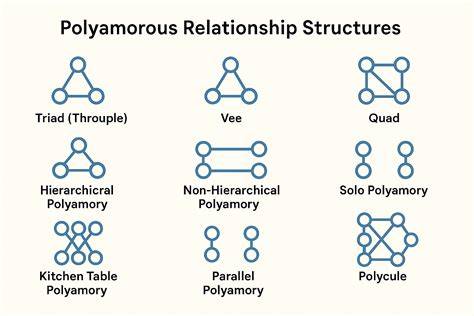
It’s not one thing. That’s the first trap people fall into. Polyamory is an umbrella term. For some, it’s a primary partner and casual outside dates. For others, it’s multiple committed relationships. And for a few? It’s solo poly—dating independently with no interest in a “primary” hierarchy. In a place like St. Albert, the version you practice often depends on your stage of life. Are you a young professional? A married couple with kids? Someone divorced and questioning everything? Your approach will be wildly different. And the key? Being brutally honest about what *you* want before you even open an app.
So what does that mean practically? It means your Friday night might be a date with one partner, Saturday with another, and Sunday is strictly for yourself. It means explaining to a new potential partner that yes, you have a boyfriend, and no, he’s not going anywhere, and yes, she’s totally welcome to meet him. It’s scheduling. Lots of scheduling. And it’s a level of emotional honesty that monogamous dating rarely demands. You can’t hide behind “we’re exclusive.” You have to face the music: you’re choosing to build something with more than one person, and that requires a different kind of backbone.
Is polyamory just an excuse to sleep around?
God, I hate this question. But it’s the first one everyone asks. Look, can it be that for some people? Sure. Just like monogamy can be an excuse for control or complacency. But real polyamory? It’s not about collecting people. It’s about the radical idea that love isn’t a finite resource. You don’t love your second child less than your first, right? Same principle. The difference is sex. And intimacy. And time—which is the actual finite resource. So no, it’s not “just” sleeping around. If that’s all you want, hire an escort or use Tinder casually. Polyamory, when done ethically, is about building relationships, not just lining up hookups. It’s way more complicated than a one-night stand.
Where Do You Actually Find Polyamory Partners in St. Albert?
This is the million-dollar question. You can’t exactly put a sign on your lawn. St. Albert isn’t exactly known for its underground polycule scene. So, you get creative. You pivot. You look in the places where open-minded people congregate. Think about it: where do the artists hang out? Where are the indie coffee shops? What about the bookstores? The goal isn’t to hit on everyone, but to build a social network where non-mainstream ideas are normal. Because here’s the thing—the best polyamory connections happen organically, through friends of friends, through the community.
But let’s be real. You’re probably going to use apps. That’s just the world we live in. Feeld is the big one, but its user base in St. Albert can be… sparse. You’ll see a lot of the same faces. OKCupid, with its detailed questions about non-monogamy, is actually better for finding people who’ve done the work. Tinder? Possible, but you’ll wade through a swamp of people who didn’t read your bio. And there’s always FetLife, if you’re into the kink scene, which often overlaps heavily with poly. Just be prepared to travel. A lot of your dates will end up being in Edmonton. It’s just the reality of living near a smaller city. You expand your radius or you expand your patience.
What dating apps actually work for poly in this area?
Feeld is the trendy answer. It brands itself as the “kinky” app. But honestly? In St. Albert/Edmonton, it’s become a bit of a ghost town for genuine poly connections. Lots of curious couples looking for a third for one night. If that’s your thing, great. But if you want a relationship, you’ll be disappointed. OKCupid, despite being older, is better. Their matching system actually lets you filter for people who are cool with non-monogamy. You can see their answers to questions about jealousy and open relationships. It saves so much time. I’d also say Hinge, if you’re upfront in your prompts. “Looking for ethical non-monogamy” in the first line. It weeds out the confused pretty fast. You’ll get fewer matches, but the matches you get will actually understand the assignment.
The Unspoken Rules: Dating a Couple vs. Dating an Individual

This is where things get messy. In polyamory, you have to distinguish between the package and the person. Are you dating a unit (a pre-existing couple) or are you dating an individual who happens to have other partners? These are not the same thing. “Couple privilege” is real, and it can be toxic. If a couple is dating someone “together,” that new person often gets treated as an accessory to their relationship, not a whole human with their own needs. It’s called “unicorn hunting,” and it’s usually a disaster. The relationship hierarchy is pre-set, and the new person has to fit into their box. It rarely works.
Conversely, dating an individual poly person—someone who has a partner but dates separately—is completely different. You build a relationship with *them*. You might meet their partner eventually, or you might not. You’re not dating the couple; you’re dating a person who has a full life. This is generally healthier. You’re treated as an equal, with your own schedule, your own needs, your own say in how the relationship evolves. The distinction is everything. If someone says “we” are looking to date, ask clarifying questions. Who exactly am I dating? Both of you? Just one of you? Get it in writing. Seriously.
What’s a “unicorn” and why is everyone so wary of them?
A unicorn is the mythical bisexual woman who wants to join an existing heterosexual couple, date both of them equally, never have any needs of her own, and never disrupt their perfect relationship. She’s a fantasy. And the hunt for her—”unicorn hunting”—is the polyamory equivalent of a pyramid scheme. It preys on people (usually young, bi women) and treats them as disposable. The couple wants to “add a third” to their perfect life, but they rarely want to do the work of dismantling their couple privilege. The unicorn is expected to fit in, not change anything. And when feelings get complicated? She’s tossed out. That’s why experienced poly people run from couples advertising as a package deal. It’s a massive red flag. Are there exceptions? Extremely rare ones. But generally, if a couple approaches you as a unit, run.
Managing Jealousy in a Small Community
Jealousy is the big one. Everyone thinks they’re above it. No one is. But in a town like St. Albert, where you might run into your partner and their other partner at the farmers’ market or at the only decent brunch spot on a Sunday? It gets amplified. You can’t just avoid it. You have to build a toolkit. And that toolkit isn’t about suppressing jealousy—it’s about interrogating it. What is the jealousy actually telling you? Are you feeling insecure because you haven’t had a date night in two weeks? Are you feeling left out because they went to a concert you wanted to see? Jealousy is often a symptom, not the disease itself.
The fix? Radical, obnoxious honesty. You have to talk about it. Not in an accusatory way—”You made me jealous by seeing her!”—but as a statement of fact. “I’m feeling jealous right now. I think it’s because we haven’t had quality time. Can we schedule something?” It’s vulnerable. It sucks. But it works. And the other part is compersion—that weird poly word for feeling happy when your partner is happy with someone else. You can’t force it. Sometimes it shows up. Sometimes it doesn’t. And that’s okay. The goal isn’t to feel compersion; the goal is to not let jealousy control your actions. You can be jealous and still be kind. You can be uncomfortable and still be supportive. That’s the real work.
How do you deal with seeing your partner with someone else?
Honestly? Sometimes you don’t. Sometimes you go home and scream into a pillow. And that’s allowed. The pressure to be the “cool poly partner” is immense. But you’re human. Seeing someone you love be intimate with another person can trigger a primal response. The trick is to have a plan. Do you need to leave? Do you need to text them later? Do you need a hug from a friend? Have your own support system. Don’t make your partner your only emotional outlet for the feelings *they* caused by having another date. That’s unfair. So you build your own network. You call a friend. You go for a run. You sit with the feeling until it passes—because it always does. Feelings are waves; they crash and then recede. You just have to learn to surf.
Privacy vs. Secrecy: The St. Albert Paradox
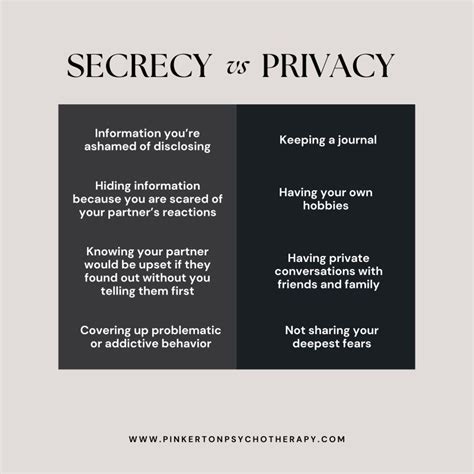
You’re poly in a small city. You have a job. Maybe you have kids. You can’t exactly be out and proud to everyone. So you learn the dance. Privacy is protecting your personal life from the judgment of strangers. Secrecy is hiding it from the people who matter. There’s a huge difference. You might be private with your coworkers—they don’t need to know your dating structure. But if you’re hiding your other partner from your primary? That’s secrecy, and it’s a betrayal. The boundaries have to be crystal clear. Who needs to know? Your kids? Your ex? Your landlord? Discuss it. Map it out.
And the practical side? In St. Albert, you’ll have “overlap” moments. You’ll be at a restaurant and see your neighbor. You’ll be at Superstore buying condoms and run into your kid’s teacher. It happens. You have to be prepared to either be casually vague (“Oh, just having dinner with friends”) or, if you’re comfortable, just own it. I knew a guy who simply introduced both his partners as his partners. The cashier at Safeway didn’t care. Most people are too wrapped up in their own lives to give yours a second thought. The fear of exposure is often worse than the exposure itself. Not always. But often.
Should I tell my kids I’m polyamorous?
This is heavy. There’s no universal answer. Depends on their age, your relationship with your co-parent, the stability of your home. Little kids? They just need to know they are safe and loved. They don’t need a lecture on relationship structures. Teenagers? They’re smarter than you think. They’ll figure it out. And if you lie, you lose their trust. I think the best approach is honesty without over-sharing. “Aunt Sarah is Daddy’s girlfriend. She’s an important part of his life, just like your mom is.” Frame it around love and support, not sex. The worst thing you can do is create a shroud of shame. If you act like it’s a dirty secret, they’ll absorb that shame. If you act like it’s just another way adults do relationships, they’ll probably shrug and go back to their phones. Kids are adaptable. Adults are the ones with the hang-ups.
The Reality of “Escort Services” and Sexual Attraction in Polyamory

Okay, let’s touch the third rail. The user mentioned escort services. In the context of polyamory, it comes up. Not everyone wants a full romantic relationship. Sometimes, you or your partner might have a need that isn’t being met—a specific kink, a desire for anonymous sex, or just a release. Some poly folks are completely fine with their partners seeing a professional. It’s a transaction, not a relationship. No threat of emotional entanglement. For others, it’s a hard no. The key, as always, is negotiation. It’s not cheating if it’s disclosed and consented to. But it has to be explicitly discussed. “Hey, I’m thinking of seeing an escort. How do you feel about that?” And you have to be ready for the answer to be no.
And then there’s just plain sexual attraction. Polyamory doesn’t mean you’re attracted to everyone. It doesn’t mean you’re constantly hunting. It means you’re open to connection when it happens. In a small dating pool, that might mean your partners’ partners become attractive to you. Polyamory has a term for that: “messy lists.” People you’re not allowed to date. Coworkers. Best friends. Family. Sometimes, exes. You set those boundaries to protect the core relationships. Because while love might be infinite, drama isn’t worth it. You learn to appreciate attraction for what it is—a feeling—without acting on it. It’s a skill. You can be wildly attracted to someone and still choose not to pursue them because it would blow up your life. That’s not repression; that’s wisdom.
Can you be poly and still use dating apps for just hookups?
Absolutely. Labels are just shortcuts. You can be polyamorous and have one-night stands. You can be polyamorous and celibate for a year. The structure doesn’t dictate the behavior. The issue is honesty. If you’re on Tinder looking for a hookup, and you have a partner at home, you need to tell that person. “Hey, I’m going out tonight and might hook up with someone.” And you need to tell the hookup, “Hey, I’m poly, I have a partner, this is just for fun tonight.” If everyone knows the score, it’s fine. The problems start when people assume. They assume you’re single. They assume you’re exclusive. They assume you want more. So you over-communicate. It’s annoying, but it’s the price of entry.
Building a Poly Community When There Isn’t One
St. Albert isn’t San Francisco. There’s no poly bar. So you build it. Start a book club focused on relationship anarchy. Host a board game night and make it explicitly inclusive. Go to Edmonton poly meetups—they exist, you just have to dig on Meetup.com or Facebook. You create the gravity. It takes time. And you’ll have to accept that your community might be small. A handful of trusted people who get it. That’s enough. Quality over quantity. These are the people you call when jealousy hits, when a date goes wrong, when you need advice on how to tell your mom. They’re your safety net. Nurture those connections like they’re relationships themselves—because they are. Your community is your relationship anarchy in action.
And don’t forget the online world. Discord servers, Reddit communities (r/polyamory is a classic), even Instagram circles. They’re not a replacement for local friends, but they’re a lifeline. They remind you that you’re not broken, not weird, not alone. There are thousands of people navigating the exact same scheduling conflicts, the exact same jealous spirals, the exact same joy of watching a partner fall in love with someone new. Use them. Lurk. Ask questions. But eventually, bring that knowledge back to your local coffee shop, to your local park bench. The goal is to live this life in the real world, not just in theory.
What if I try it and realize it’s not for me?
Then you stop. It’s that simple and that hard. You have a conversation with your partners. You renegotiate. Maybe you close the relationship. Maybe you break up because you want fundamentally different things. But trying something and realizing it doesn’t fit is not failure. It’s data. You now know something crucial about yourself. The only failure is staying in a structure that makes you miserable because you’re afraid of admitting you were wrong. Polyamory isn’t morally superior to monogamy. It’s just a different set of challenges. If it’s not for you, walk away. Your people will understand. And if they don’t? They weren’t your people. The whole point is to build a life that feels true. Even if that truth changes.